I feel enough time has passed for me to admit that 2020 was, in many ways, one of the best years of my life.
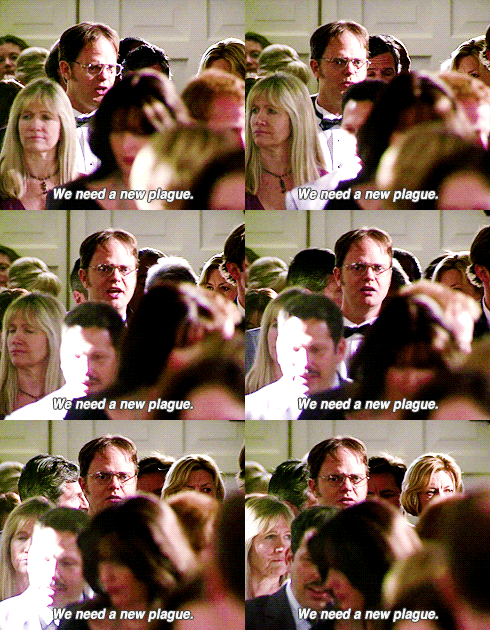
While the world seemed to decay, I flourished. I received all three stimulus checks, hazard pay for working in an eerily empty Starbucks front, a dorm hall to myself, and my one and only 4.0 semester. In that combination of stillness and abundance, I found focus. The world’s madness became a kind of incubator for my own unprecedented personal, spiritual and artistic growth.
However, it is not lost on me that, across the globe, 2020 was a year of profound loss and trauma. People died alone. People lost loved ones. People gained lifelong disabilities. People protested. There are even people who, still today, are trying to replace the livelihoods lost during the ongoing global pandemic. For many, 2020 was the beginning of the end.
And yet, art persisted.
It adapted to constraint, stretched across mediums and in many ways, deepened. Some of the most inventive and emotionally resonant work of that time emerged not despite the circumstances, but because of them. As physical spaces closed and screens became primary sources of connection, we prioritized visual storytelling. There was an unspoken, shared understanding that art was more sustenance than mere entertainment—a way to process grief, resist isolation and remain human in a dehumanizing time.
I, myself, even attended a fair share of virtual poetry slams, productions and dance classes. There was a unique intimacy to it all. Watching performances unfold from bedrooms, witnessing artists in their raw, unpolished environments, making art of their resourcefulness. It collapsed the distance between creator and audience in a way that felt both alien and deeply human.
The idea of a doomsday or an apocalypse is as fantastic as the prospects of heaven and hell. More mythological than inevitable. They are mere, subjective states of being rather than prophecies. Every time it seems as the world is ending, it’s usually when instability that has long existed elsewhere finally impacts America(ns). So when I hear unprecedented times, I can’t help but roll my eyes like a sleeper agent, able to point to several primary sources that prove otherwise.
Maybe if we asked the teenagers of the 1960s, riddled with nuclear anxiety, political assassinations and intimate wartime if the world was ending, they would share the same angst. Maybe if we ask the children of eastern genocides if the world is ending, the question itself will feel displaced.
And still, art is made.
How do you create, promote or even care about art a at a time like this? When your neighbors are starving? When your government is killing citizens and eating children? The same way you always have: inspired with intention. With urgency. With whatever material, energy and hope you have left. Art is one of the most efficient ways to understand history in context. The protest songs and experimental films of the 1960s, the digital performances and immersive archives of 2020, even the independent and analog productions of today all serve as a record of how people feel, cope, resisted and imagine otherwise. Your art does not have to be bloody, just honest.
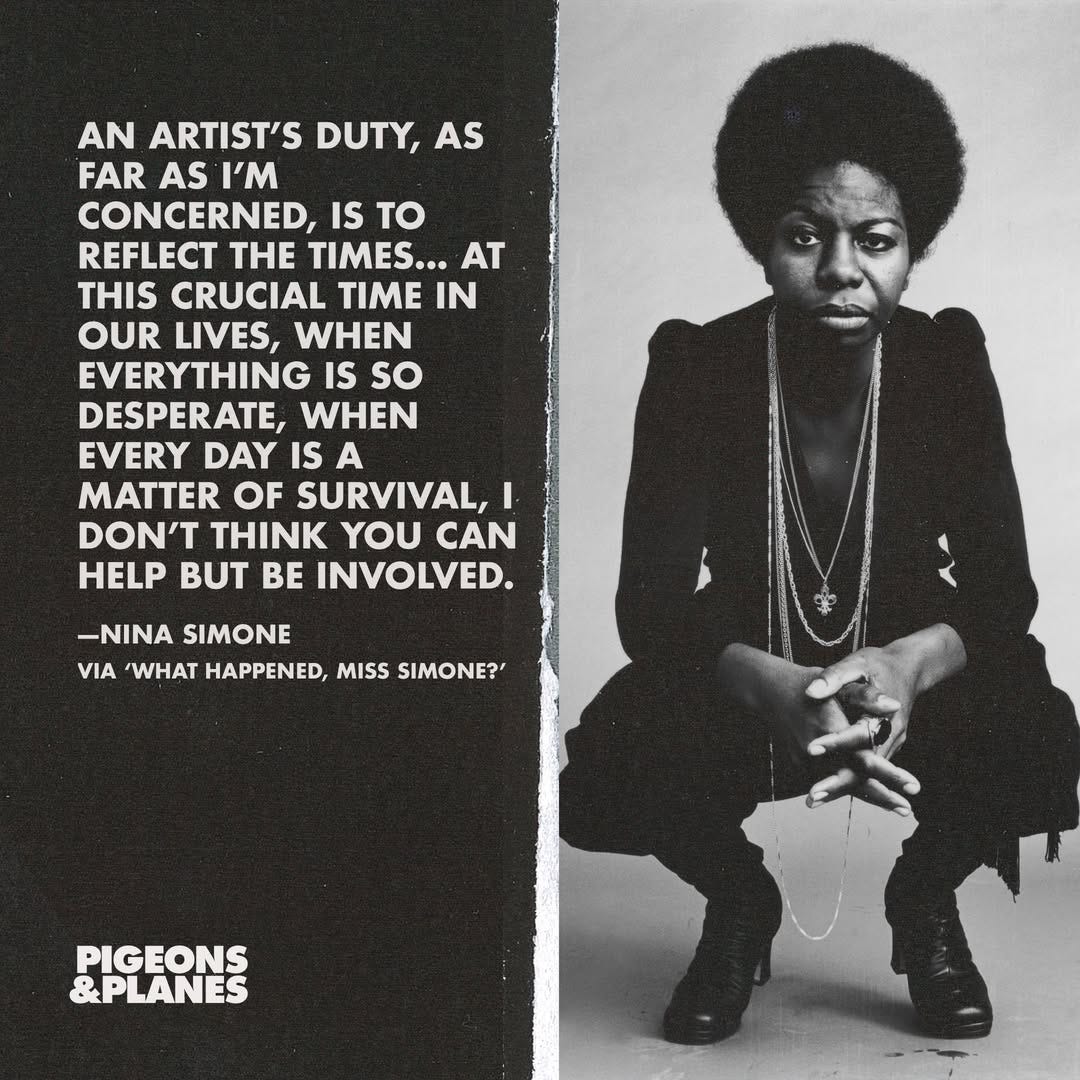
History rarely moves in parallel lines. It fractures, overlaps and reshapes itself through the people living inside. Someone’s doomsday is someone else’s hard reset, clean slate, cleared land. And art, in all its forms, becomes the evidence of their existence.
stay in touch
if they find a lake on mars (poetry collection) | instagram | poetry archive | linkedin
one nation, under which God? (academic publication) | film review
goodreads (book reviews) | letterboxd (film reviews)
inspyrfaith is self curated, written, edited and published.
inspyrfaith is and will remain free to read and engage with.
inspyr is a professional writer and researcher, nothing more.
always consult an expert before taking action.

you can cheer me on by subscribing, sharing and/or commenting your thoughts <3.